Cangaço comes supplied with a core set of rules; these are the most basic game rules to make up a standard small game. We want you to feel a bit immersed in this whole new scenery and in the near future, we will have provided more advanced and detailed rules, which will help expand the game and offer a variety of optional additions that you can apply to your games.
In Cangaço game we will use the Point Buy System to create our bands. Each band will have 50 points to distribute among the models; these points will indicate some skills or qualities that each player will use to distinguish and outline his band to the excellence. We think this is the best kind of game system: if in the future the players need a more consistent scenario to play on campaigns.
BandsIn Cangaço, a BAND is an individual or group of miniatures. We suggest about 3 to ten on each side but the point buy rule will allow larger groups The standard game of Cangaço usually features a band versus band, this don’t need to be the only way if the mutual agreement 3 players can share the same table fighting each other or making alliances against a larger force. The size and time of a game may vary, depending on the kind of game players mutually agree to play.
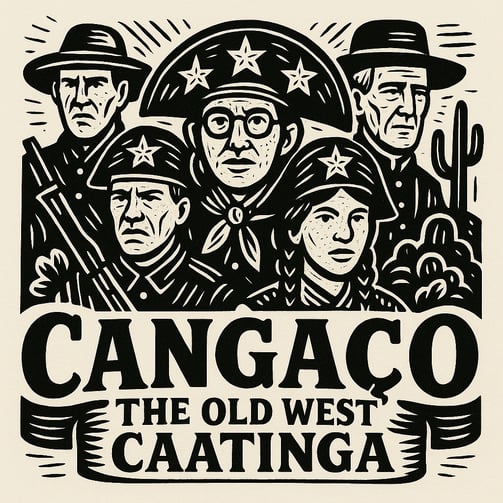
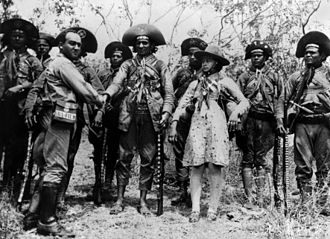
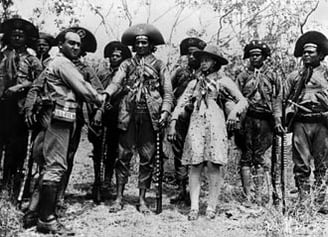
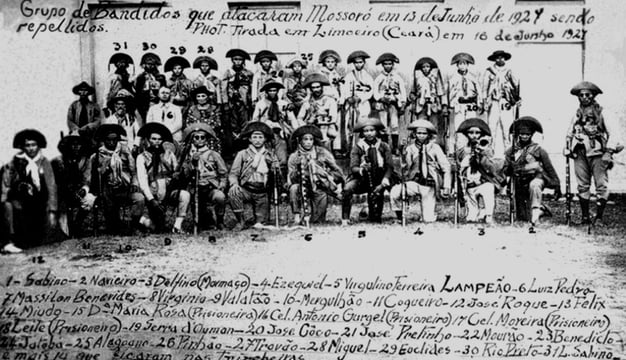
Cangaço was a popular movement that became a cultural phenomenon, and in some treatises, social banditry, a term coined in the 1960s by Eric Hobsbawm (1), point to a wave of crimes and violence that occurred in almost the entire backlands of Northeastern Brazil between the 19th century and the mid-20th century. Its members roamed in groups, crossing states and attacking cities, where they committed looting, murder, kidnapping and rape.
For many experts, Cangaço emerged as a form of defense for backlands people in the face of serious social problems and the ineffectiveness of the State in maintaining order and enforcing the law. One of the main leaders of Cangaço was Virgulino Ferreira da Silva, known by his war nickname as Lampião. The term Cangaço comes from the word canga, a piece of wood used to attach a team up an ox to a cart or plow, also known as a yoke. And the habit, of Cangaceiros, man that live by yourselves, of walking around with all their equipment attached to their bodies was worth appropriating the term that was already used by locals at the time.




The emergence of the militia bandit or Jagunços (the militia of the land owners) appears historically before the social bandit. These militias were maintained by the great landowners, the so-called Coroneis (aka: Colonels as the military rank), who maintained civilian and irregular armed forces for the protection and coercion of the population regarding their lands, or even to expand them over neighboring colonels. The Cangaço was a counterpart that emerged to combat this oppression and free themselves from the yoke of the colonels, thus emerging the social bandit, a revolutionary, independent, who in the eagerness to accumulate wealth, also brought a certain freedom to the population regarding his area the sertanejo people living. However, both bandit movements were similar in the aspect of the use of violence, brutality and criminality, both to intimidate the enemy and to maintain allies within their leash of loyalty.
With the death of the illustrious Lampião in 1938, and the military pressure in the Northeast increasing, to the point of making the remaining bands, or offer to surrender to the government in exchange for amnesty, or give up life in the Cangaço way, and move to other places where they were unknown.


About Voxelhouse
OUR EMAIL:
Newsletter
© 2025. All rights reserved.